

Cultures
Choosing the right cultures for your application is the basis of your success. Here you will find the different ranges of cultures available.

KEFIR DC for Freeze-dried 1000L
Application:
- kefir of mild taste and high viscosity.
- kefir drink of mild taste and high viscosity.
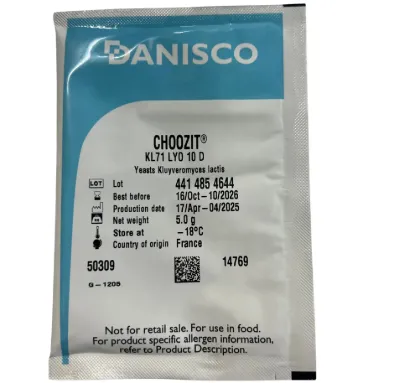
KL71 Freeze-dried 10 D
- Development potential of KL 71 LYO 10 D in the cheese maturation environment.
- Rapid neutralisation capability, aroma development, and enzymatic activity.
- KL 71 LYO 10 D is compatible with other desirable flora during cheese making.
- Carbohydrate metabolism: assimilation of sugar (strict aerobic).
- Protein metabolism: caseolytic and aminopeptidasic activity, yielding peptides and amino-acids.
- Lipid metabolism: degradation of triglycerides.
- Kluyveromyces lactis is a synonym of Kluyveromyces marxianus var. lactis.
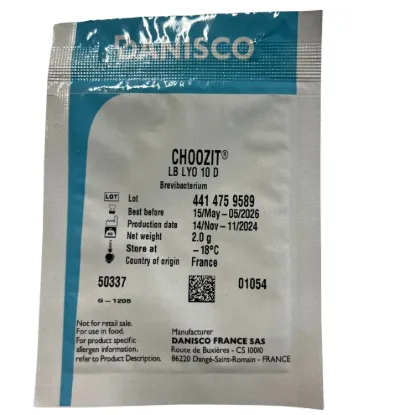
LB Freeze-dried 10 D
- Formation of a natural, ivory to orange coloured surface flora.
- Development of characteristic aromas and flavours.
- When LB LYO 10 D is inoculated into milk before renneting, it allows to achieve some degree of pre-ripening.
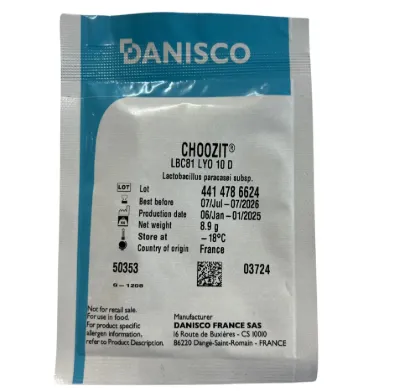
LBC 81 Freeze-dried 10 D
- Lactobacillus paracasei subsp. paracasei is commonly named Lactobacillus casei.
- Thanks to aminopeptidase activity, LBC 81 LYO 10 D is interesting in all cheese making technologies, particularly during secondary proteolysis, for hydrolysis of bitter peptides.
- LBC 81 LYO 10 D provides a microbial protection of the substrates by rapid implantation (competition effect), a shorter maturation time, a low lipolytic activity and enhanced flavour and aroma.
- Use of active strains at low temperatures (10 to 15°C) reduces maturation time while enhancing the organoleptic quality of the cheese.
LH 100 Freeze-dried 50 DCU
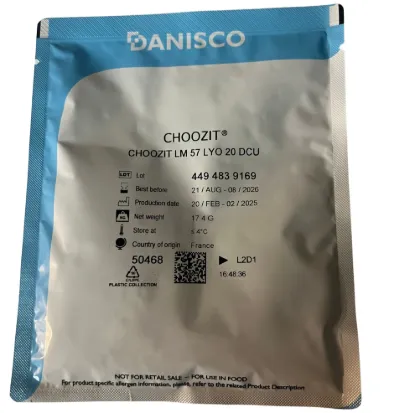
LM 57 Freeze-dried 20 DCU
- Gas producing mesophilic cultures.
- Gas production is measured on sterilised reconstituted milk (13%), standardised to pH 6.60, to which has been added 5g per litre yeast extract, incubated at 30°C for 24 hours.
- 40 ml of inoculated milk with a concentration of 2 DCU / 100 l of milk and incubated at 30°C for 24 hours give, in experimental conditions, more than 25ml of CO².
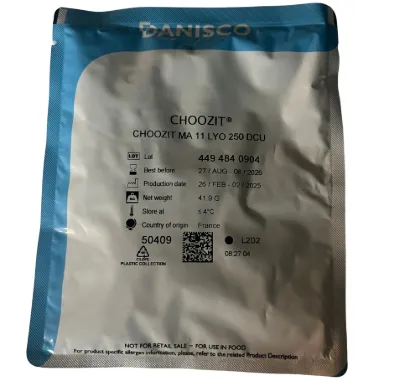
MA 11 Freeze-dried 250 DCU
Mesophilic cultures providing reliable acidification profiles.
Eliminates the need for bulk starter preparation.
A phage alternative is available on request.

MA 14 Freeze-dried 125 DCU
Mesophilic cultures providing reliable acidification profiles.
Eliminates the need for bulk starter preparation.
A phage alternative is available on request.
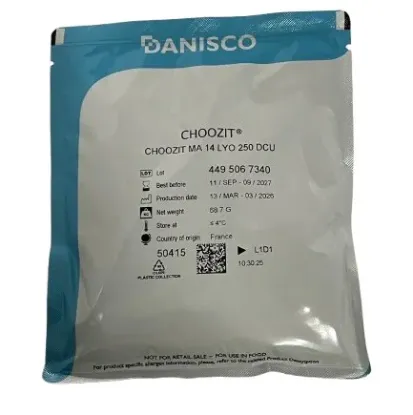
MA 14 Freeze-dried 250 DCU
Mesophilic cultures providing reliable acidification profiles.
Eliminates the need for bulk starter preparation.
A phage alternative is available on request.
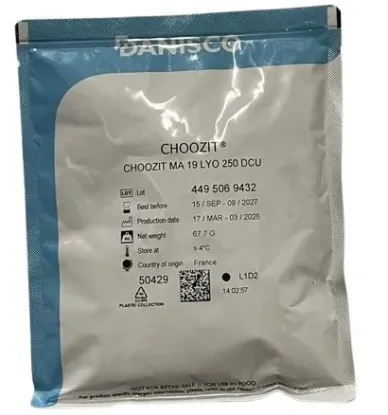
MA 19 Freeze-dried 250 DCU
Mesophilic cultures providing reliable acidification profiles.
Eliminates the need for bulk starter preparation.
A phage alternative is available on request.
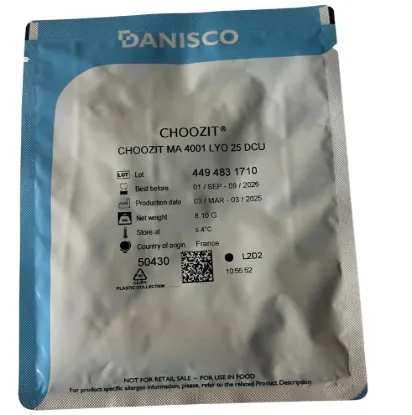
MA 4001 Freeze-dried 25 DCU
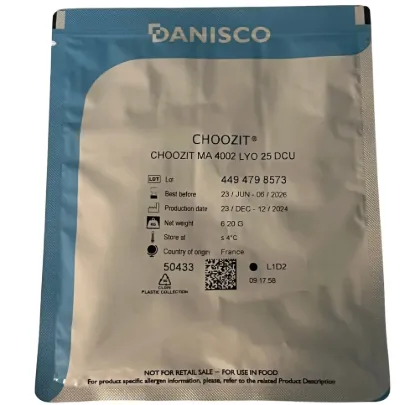
MA 4002 Freeze-dried 25 DCU
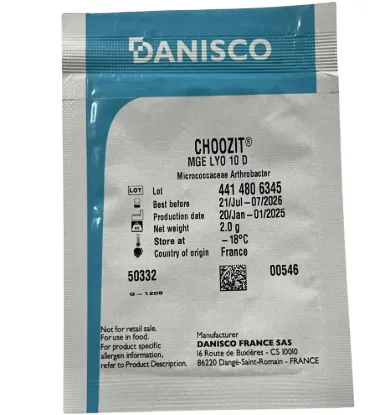
MGE Freeze-dried 10 D
- Formation of a natural, white-creamy coloured surface flora.
- Development of characteristic aromas and flavours.
- When MGE LYO 10 D is inoculated into milk before renneting, it allows to achieve some degree of pre-ripenning.
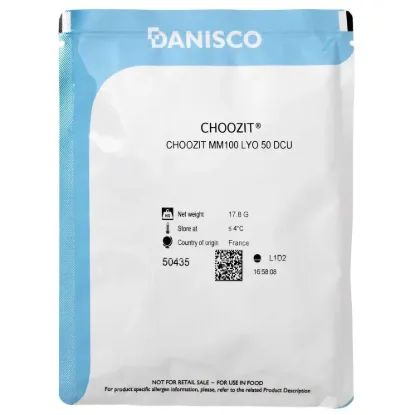
MM 100 Freeze-dried 50 DCU
Mesophilic culture providing reliable acidification profile with a nice flavour development and controlled gas production.
Eliminates the need for bulk starter preparation.
A phage alternative is available on request.
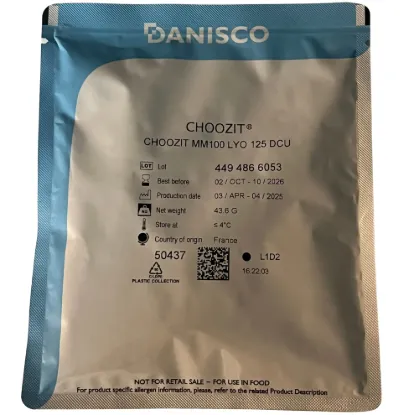
MM 100 Freeze-dried 125 DCU
Mesophilic culture providing reliable acidification profile with a nice flavour development and controlled gas production.
Eliminates the need for bulk starter preparation.
A phage alternative is available on request.
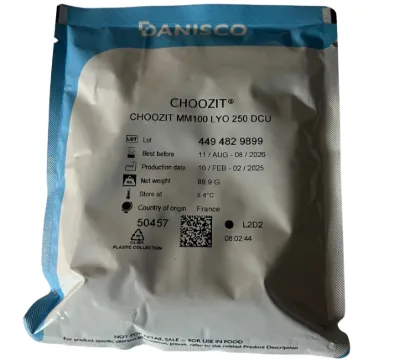
MM 100 Freeze-dried 250 DCU
Mesophilic culture providing reliable acidification profile with a nice flavour development and controlled gas production.
Eliminates the need for bulk starter preparation.
A phage alternative is available on request.
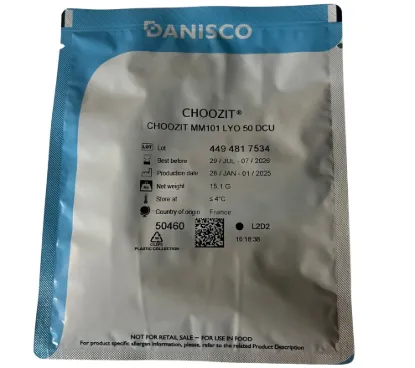
MM 101 Freeze-dried 50 DCU
Mesophilic culture providing reliable acidification profile with a nice flavour development and controlled gas production.
Eliminates the need for bulk starter preparation.
A phage alternative is available on request.
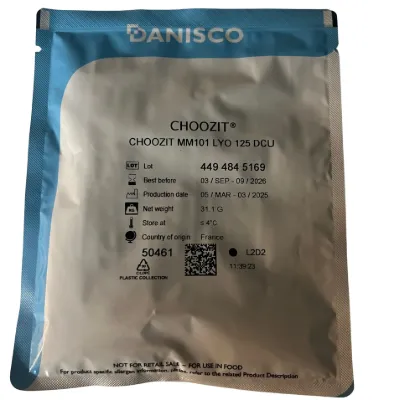
MM 101 Freeze-dried 125 DCU
Mesophilic culture providing reliable acidification profile with a nice flavour development and controlled gas production.
Eliminates the need for bulk starter preparation.
A phage alternative is available on request.
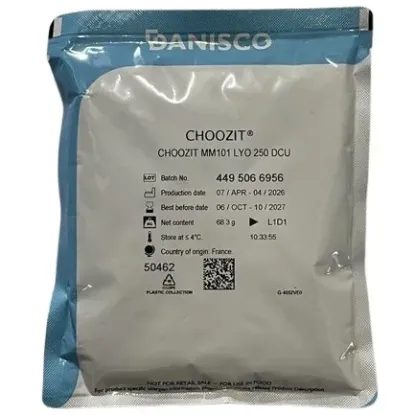
MM 101 Freeze-dried 250 DCU
Mesophilic culture providing reliable acidification profile with a nice flavour development and controlled gas production.
Eliminates the need for bulk starter preparation.
A phage alternative is available on request.
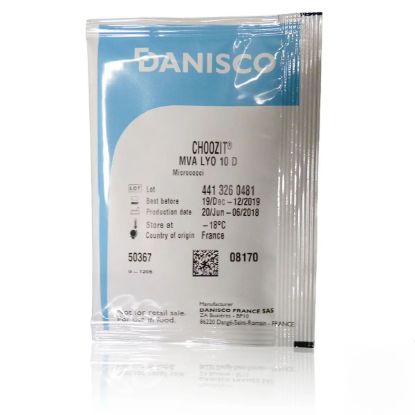
MVA Freeze-dried 10 D
- The catalase positive micrococcacae are optional anaerobes and are unable to acidify or ferment the sugar in milk. This strain exhibits a good resistance to salt and its enzymatic activity contributes to develop flavour and texture.
- Stimulation of lactic cultures.
- Enhancement of cheese texture and aroma.
- Rapid, selective implantation can inhibit potentially contaminating micro-organisms.

P. roqueforti PV Freeze-dried 10 D
P. roqueforti PV LYO 10 D is a very fast growing blue mould culture with strong proteolytic and lipolytic activity and strong tolerance to salts. Cheeses produced with P. roqueforti PV LYO 10 D have an intensive dark blue-green marbled interior. Characteristic properties are the very piquant aroma and a very good, creamy consistency. Loose moisture can occur and a tendency to bitterness is observed.
P. roqueforti PV LYO 10 D can be used for blue mould cheese such as Roquefort and strong Gorgonzola.
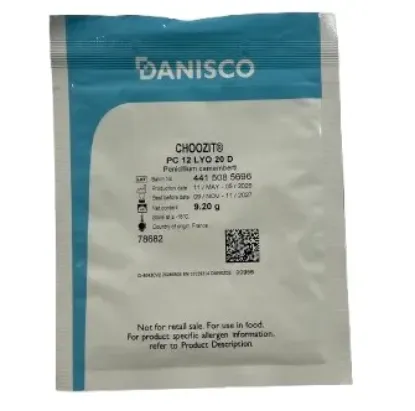
PC 12 Freeze-dried 20 D
PC 12 LYO 20 D is a maturation/ripening culture made up of Penicillium candidum spores from strains which are specifically selected and designed to ensure the ageing without flavour and aspect defects, for soft body cheese, surface mould.
Specially adapted to soluble products with 70 to 90 days shelf life. More, it suits to more traditional curds.
Strain of Penicillium candidum allows to get a good mycelium cover stability on soft cheese along the shelf life of the cheese. No flavour defects along the shelf life of cheese: good biochemical stability due to low enzymatic activities. Whiteness and homogeneous appearance on faces, heels and rims until 90 days. Selected strain formula designed to be compatible with the different wrappings on market.
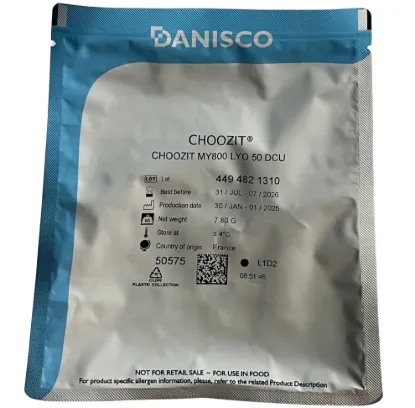
MY 800 Freeze-dried 50 DCU
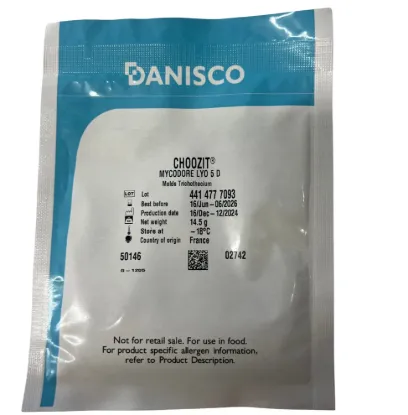
MYCODORE Freeze-dried 5 D
- Specific mould for St Nectaire, Tommes de Montagne and mixed surface flora cheeses. It is widely used in the production of traditional raw milk cheeses.
- White, fluffy surface appearance.
- Browny yellow underside tending towards a dark brown, and producing oval spores.
- Good resistance to salt, growth will be affected beyond 2% NaCl, influence of pH at 12°C, optimum pH is close to 7.00, growth inhibited at pH < 5.00.