Cheese Starter Cultures
Starter cultures are the first step in cheesemaking.
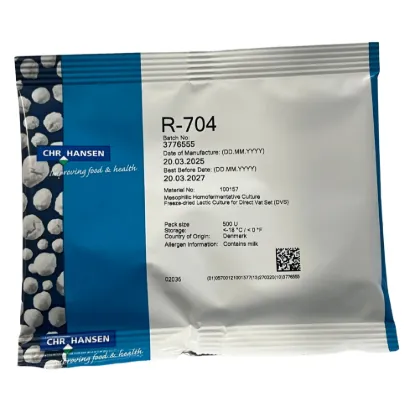
R-704 Freeze-dried 500u
This Chr.Hansen DVS® culture contains defined mesophilic strains and is for continous direct vat set use.
The culture provides fast lactic acid production and high phage robustness without any CO2 production (homofermentative).
The culture is primarily applied in the production of cheeses with a closed texture, e.g. Cheddar, Feta and Cottage cheese.
The culture can be applied in other fermented dairy products, in combination or not with other lactic cultures.
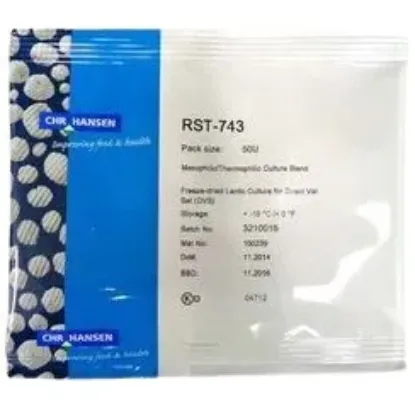
RST-743 Freeze-dried 50u
A defined strain homofermentative culture blend with improved resistance to bacteriophages.
The culture does not produce CO2.
The culture is primarily applied in the production of semi-hard, hard and very hard pressed cheeses with a closed texture and a min cooking temperature at 35°C (95°F).
Examples of applications are Cheddar, Cheshire, Colby, Monterey Jack, Munster, Fontal, Raclette & Saint Paulin.

WhiteDaily 80 Freeze-dried 50u (Ex Safe It 1)
Blend of mesophilic homofermentative and thermophilic lactic acid cultures This culture contains specially selected strains chosen for their phage resistance and ability to produce lactic acid quickly.
This culture does not produce CO2.
The culture is used in the production of White Cheeses, Feta or UF products.
Depending on production process, the texture will be firm with some holes or closed.
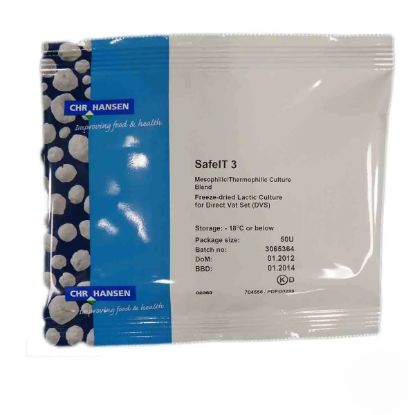
WhiteDaily 82 Freeze-dried 50u (Ex Safe It 3)
Blend of mesophilic homofermentative and thermophilic lactic acid cultures This culture contains specially selected strains chosen for their phage resistance and ability to produce lactic acid quickly.
This culture does not produce CO2.
The culture is used in the production of White Cheeses, Feta or UF products.
Depending on production process, the texture will be firm with some holes or closed.
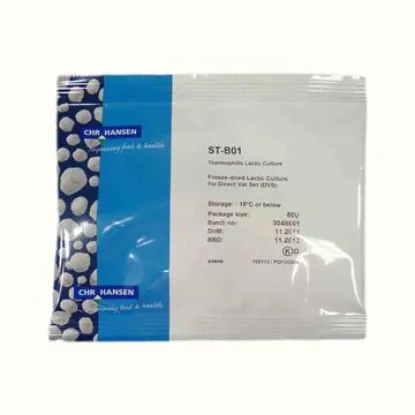
ST-B01 Freeze-dried 50 u
Defined thermophilic culture containing strains selected for their moderate lactic acid production and low post acidification.
The culture is primarily applied in the production of soft cheeses with low post acidification, e.g. stabilized cheeses and modern Camembert and Emmenthal types.
The culture can be applied alone (for stabilized soft cheese) or in combination with other lactic acid cultures, e.g. Lactobacillus helveticus (for Emmenthal).
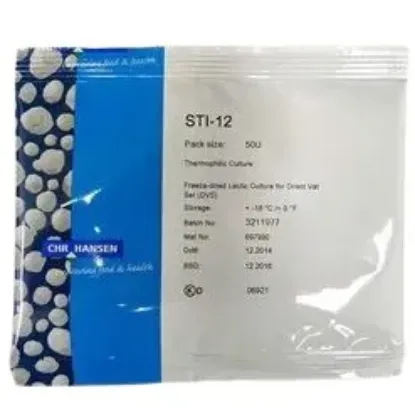
STI-12 Freeze-dried 50u
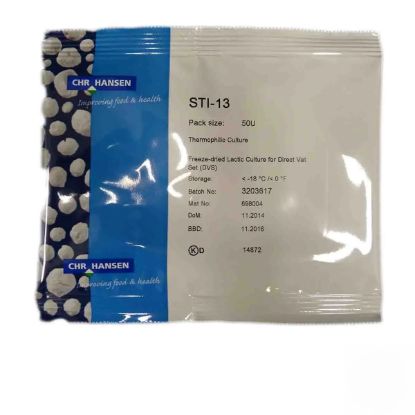
STI-13 Freeze-dried 50u
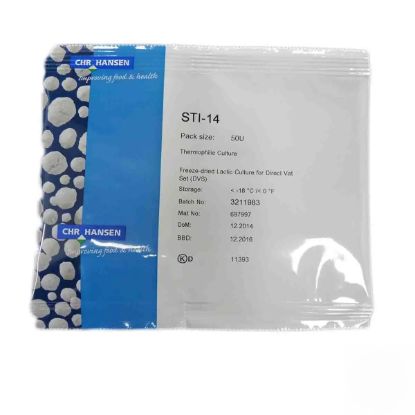
STI-14 Freeze-dried 50u

STI-12 Freeze-dried 500 u
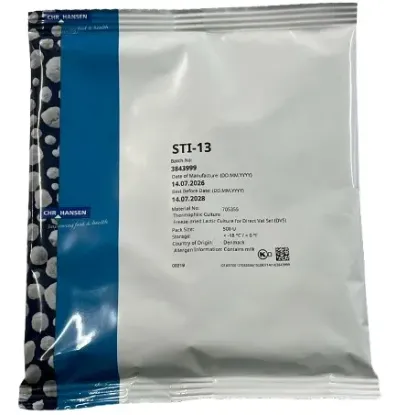
STI-13 Freeze-dried 500u

STI-14 Freeze-dried 500u
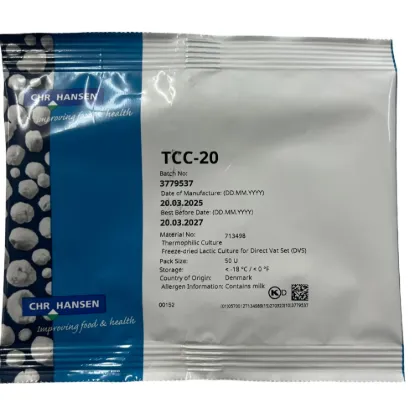
TCC-20 Freeze-dried 50u
Defined thermophilic lactic acid culture.
The culture is primarily applied in the production of Pasta Filata cheese types, e.g. Mozzarella and Pizza cheese types.
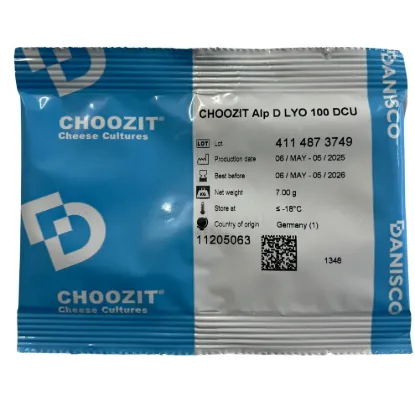
ALP D Freeze-dried 100 DCU
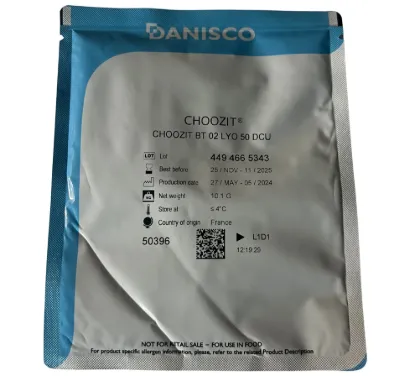
BT 02 Freeze-dried 50 DCU
Mesophilic culture offering a reliable acidification profile with optimal flavour development and gas production.
Eliminates the need to prepare a starter culture.
Phage rotation is available upon request.
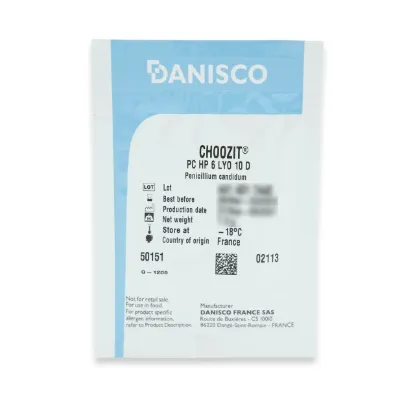
HP 6 Freeze-dried 10 D
- Medium height and density.
- Rapid growth.
- Proteolysis strong enough to allow a development on strong substrates.
- Intermediate lipolysis.
- PC HP 6 LYO 10 D provides a whiteness appearance and stability beneath the wrapper, speed of moulds growth and ageing stability.
- PC HP 6 LYO 10 D gives enzymatic activity, aroma development and inhibition of contaminants.

KAZU 1 - 1000L Freeze-dried 50dcu
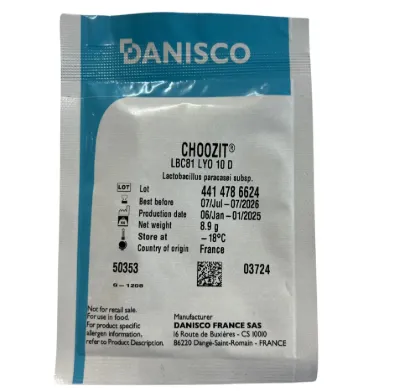
LBC 81 Freeze-dried 10 D
- Lactobacillus paracasei subsp. paracasei is commonly named Lactobacillus casei.
- Thanks to aminopeptidase activity, LBC 81 LYO 10 D is interesting in all cheese making technologies, particularly during secondary proteolysis, for hydrolysis of bitter peptides.
- LBC 81 LYO 10 D provides a microbial protection of the substrates by rapid implantation (competition effect), a shorter maturation time, a low lipolytic activity and enhanced flavour and aroma.
- Use of active strains at low temperatures (10 to 15°C) reduces maturation time while enhancing the organoleptic quality of the cheese.
LH 100 Freeze-dried 50 DCU
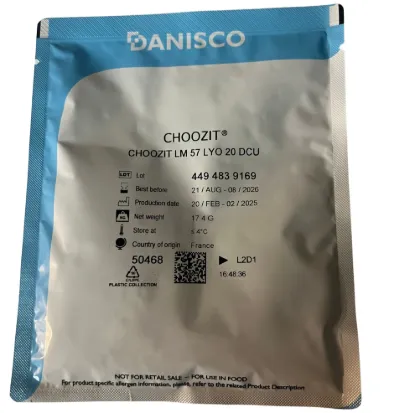
LM 57 Freeze-dried 20 DCU
- Gas producing mesophilic cultures.
- Gas production is measured on sterilised reconstituted milk (13%), standardised to pH 6.60, to which has been added 5g per litre yeast extract, incubated at 30°C for 24 hours.
- 40 ml of inoculated milk with a concentration of 2 DCU / 100 l of milk and incubated at 30°C for 24 hours give, in experimental conditions, more than 25ml of CO².
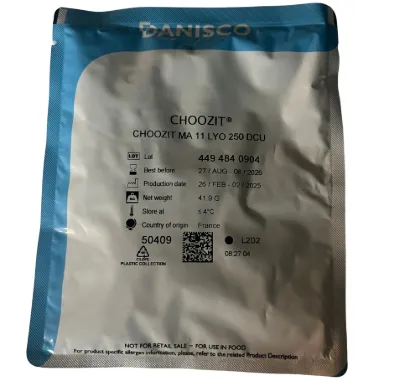
MA 11 Freeze-dried 250 DCU
Mesophilic cultures providing reliable acidification profiles.
Eliminates the need for bulk starter preparation.
A phage alternative is available on request.

MA 14 Freeze-dried 125 DCU
Mesophilic cultures providing reliable acidification profiles.
Eliminates the need for bulk starter preparation.
A phage alternative is available on request.
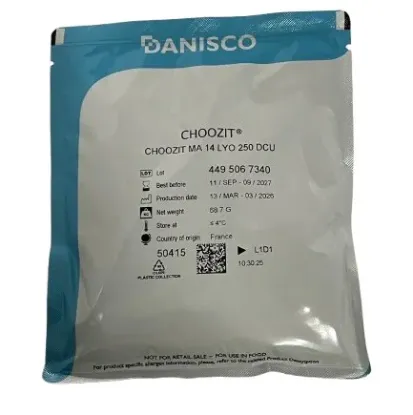
MA 14 Freeze-dried 250 DCU
Mesophilic cultures providing reliable acidification profiles.
Eliminates the need for bulk starter preparation.
A phage alternative is available on request.
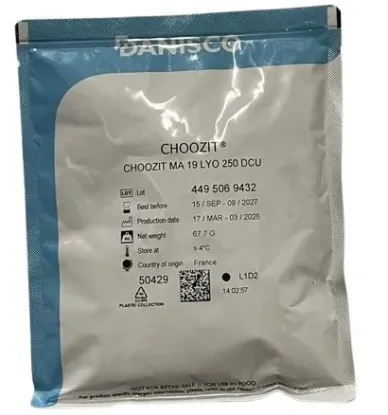
MA 19 Freeze-dried 250 DCU
Mesophilic cultures providing reliable acidification profiles.
Eliminates the need for bulk starter preparation.
A phage alternative is available on request.