
Cheese Starter Cultures
Starter cultures are the first step in cheesemaking.

RST-676 Frozen 500u
This Chr.Hansen DVS® culture contains defined mesophilic and thermophilic strains and is for continous direct vat set use.
The culture provides fast lactic acid production and high phage robustness without any CO2 production (homofermentative).
The culture is primarily applied in the production of semi-hard, hard and very hard pressed cheeses with a closed texture and a min cooking temperature at 35°C (95°F).
Examples of applications are Cheddar, Cheshire, Colby, Monterey Jack, Munster, Fontal, Raclette & Saint Paulin.

SDMB-8 Frozen 500u
Multiple mixed strain Mesophilic Aromatic Culture, type D.
The culture produces aroma and CO2.
The culture is primarily applied in the production of soft cheeses (stabilized soft cheeses, specialties) and fermented milk.
The culture can be used alone or more frequently in combination with mesophilic or SSC cultures to enhance the milky and fresh taste.

SDMB-4 Frozen 500u
Multiple mixed strain Mesophilic Aromatic Culture, type D.
The culture produces aroma and CO2.
The culture is primarily applied in the production of soft cheeses (stabilized soft cheeses, specialties) and fermented milk.
The culture can be used alone or more frequently in combination with mesophilic or SSC cultures to enhance the milky and fresh taste.
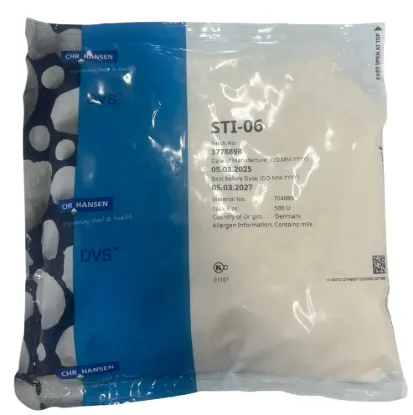
STI-06 Frozen 500u
Defined thermophilic culture blend with improved resistance to bacteriophages.
The culture is primarily applied in Pasta Filata cheese types e.g. Mozzarella and Pizza cheese types.
The culture can be applied alone or in combination with other lactic acid cultures, e.g. Lactobacillus delbrueckii subsp.bulgaricus and Lactobacillus helveticus.
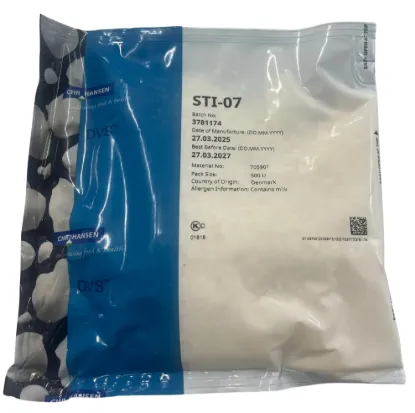
STI-07 Frozen 500u
Defined thermophilic culture blend with improved resistance to bacteriophages.
The culture is primarily applied in Pasta Filata cheese types e.g. Mozzarella and Pizza cheese types.
The culture can beapplied alone or in combination with other lactic acid cultures, e.g. Lactobacillus delbrueckii subsp.bulgaricus andLactobacillus helveticus.
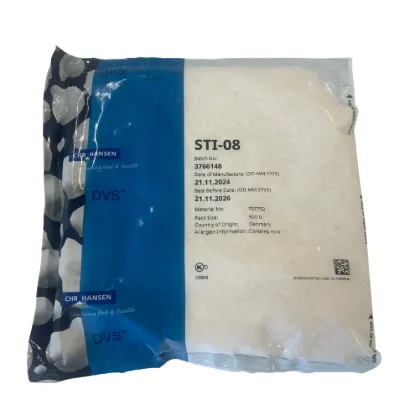
STI-08 Frozen 500u
Defined thermophilic culture blend with improved resistance to bacteriophages.
The culture is primarily applied in Pasta Filata cheese types e.g. Mozzarella and Pizza cheese types.
The culture can be applied alone or in combination with other lactic acid cultures, e.g. Lactobacillus delbrueckii subsp.bulgaricus andLactobacillus helveticus.
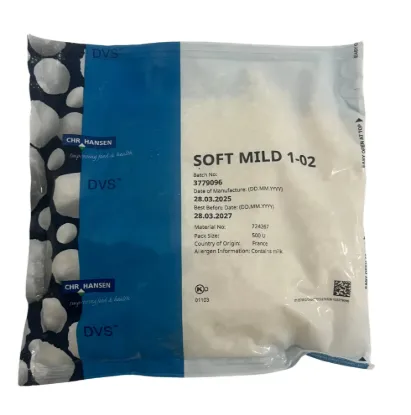
Soft Mild 1-02 Frozen 500 u
Thermophilic lactic acid cultures.
This Chr.Hansen culture system provides thermophilic defined strains for continuous Direct Vat Set (DVS®) use by rotation.
The cultures are selected for their moderate lactic acid production and low post-acidification.
The culture is primarily applied in the production of soft cheeses where low post acidification is required, e.g. stabilized soft cheeses (Brie, Crescenza, Argentinean Port Salut) and modern Camembert types.
SSC cultures can be used alone (stabilized cheeses) or in combination with Mesophilic aromatic cultures (LD types).
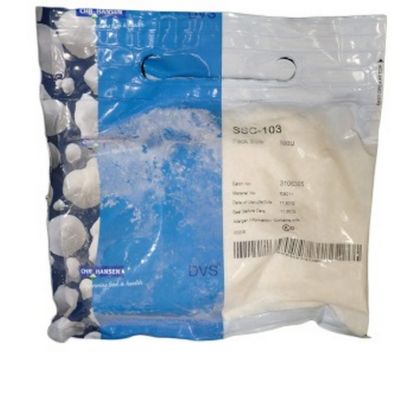
Soft Mild 1-03 Frozen 500u (SSC-103)
Thermophilic lactic acid cultures.
This Chr.Hansen culture system provides thermophilic defined strains for continuous Direct Vat Set (DVS®) use by rotation.
The cultures are selected for their moderate lactic acid production and low post-acidification.
The culture is primarily applied in the production of soft cheeses where low post acidification is required, e.g. stabilized soft cheeses (Brie, Crescenza, Argentinean Port Salut) and modern Camembert types.
SSC cultures can be used alone (stabilized cheeses) or in combination with Mesophilic aromatic cultures (LD types).
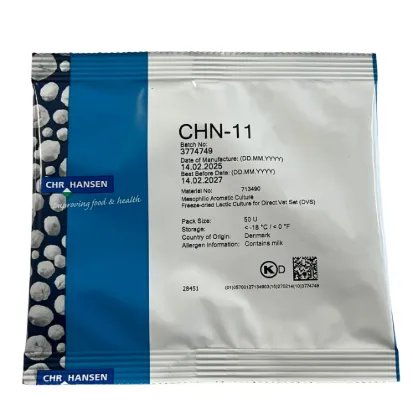
CHN-11 Freeze-dried 50u
Mesophilic aromatic culture, type LD.
The culture produces flavor and CO2.
This range provides cultures with fast acidification properties at a low inoculation rate.
The culture is primarily used in the manufacturing of Continental semi-hard cheese varieties with eyes, e.g. Gouda, Edam, Leerdam and Havarti.
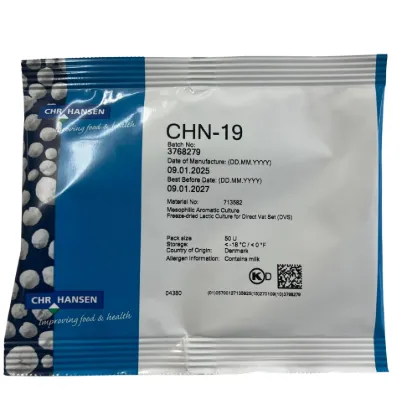
CHN-19 Freeze-dried 50u
Mesophilic aromatic culture, type LD.
The culture produces flavor and CO2.
This range provides cultures with fast acidification properties at a low inoculation rate.
As a principal rule 1000 U of freeze-dried DVS cultures will correspond to 100 l of active bulk starter.
However, specific usage rates should be determined experimentally before a new application.
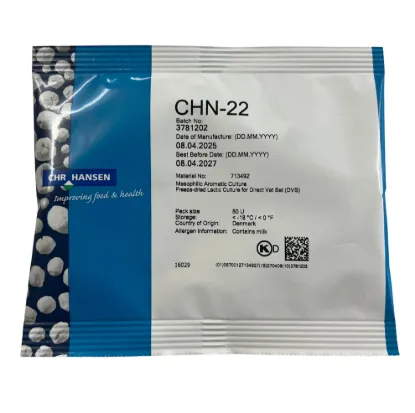
CHN-22 Freeze-dried 50 u
Mesophilic aromatic culture, type LD.
The culture produces flavor and CO2.
This range provides cultures with fast acidification properties at a low inoculation rate.
The culture is primarily used in the manufacturing of Continental semi-hard cheese varieties with eyes, e.g. Gouda, Edam, Leerdam and Havarti.
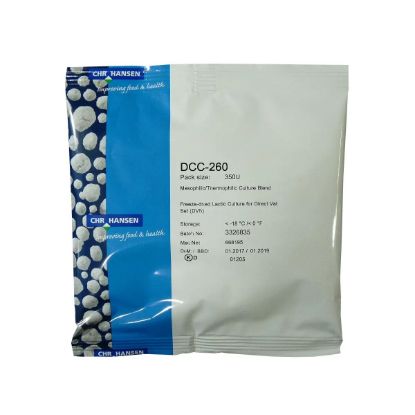
DCC-260 Freeze-dried 350u
Aromatic culture blend.
The DCC culture range provides cultures with very fast acidification properties at a low inoculation rate.
The culture produces flavor and CO2.
The culture is primarily used in the manufacturing of Dutch and Continental semi-hard cheese varieties with eyes, e.g. Gouda and Edam.
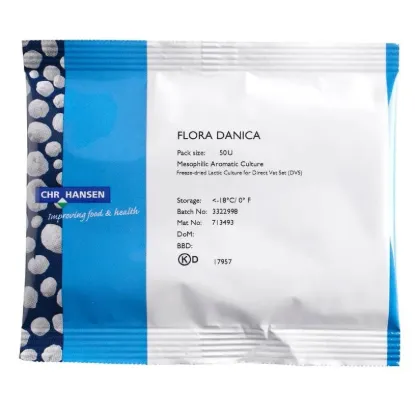
FLORA-DANICA Freeze-dried 50u
Mesophilic aromatic culture, type LD.
The culture produces flavor and CO2.
This range provides cultures with fast acidification properties at a low inoculation rate.
The culture is primarily used in the manufacturing of Continental semi-hard cheese varieties with eyes, e.g. Gouda, Edam, Leerdam and Havarti.

FLORA-DANICA Freeze-dried 200u
Mesophilic aromatic culture, type LD.
The culture produces flavor and CO2.
The culture is primarily used in the manufacture of Continental cheese types (Gouda, Edam, Leerdam, Samsoe) and soft cheese types (Lactic cheeses, Camembert, Blue cheese).
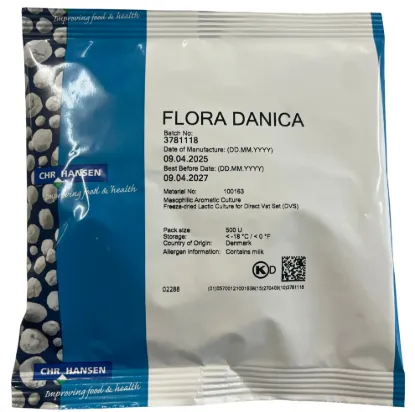
FLORA-DANICA Freeze-dried 500u
Mesophilic aromatic culture, type LD.
The culture produces flavor and CO2.
he culture is primarily used in the manufacture of Continental cheese types (Gouda, Edam, Leerdam, Samsoe) and soft cheese types (Lactic cheeses, Camembert, Blue cheese).
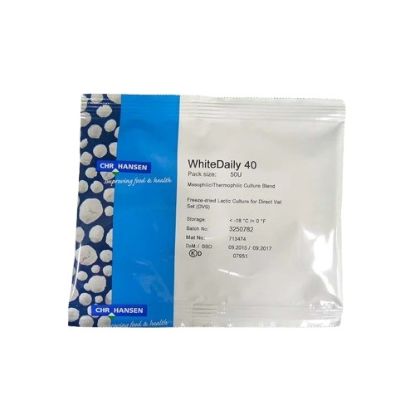
WhiteDaily 40 Freeze-dried 50u (Ex FRC-60)
Homofermentative culture blend.
The culture does not produce CO2.
The culture is used in the production of White Cheeses, Feta or UF products.
Depending on production process, the texture will be firm with some holes or closed.
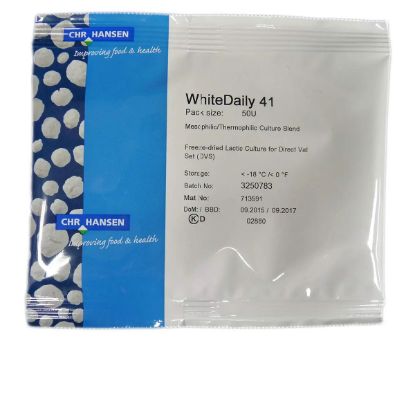
WhiteDaily 41 Freeze-dried 50u
Homofermentative culture blend.
The culture does not produce CO2.
The culture is used in the production of White Cheeses, Feta or UF products.
Depending on production process, the texture will be firm with some holes or closed.
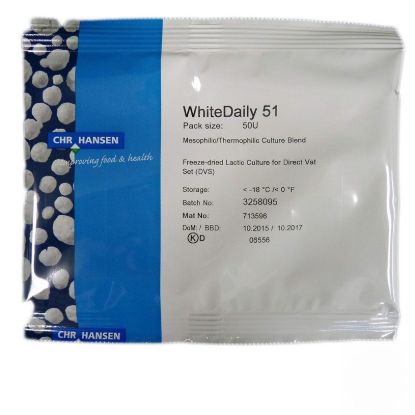
WhiteDaily 51 Freeze-dried 50u
Homofermentative culture blend.
The culture does not produce CO2.
The culture is used in the production of White Cheeses, Feta or UF products.
Depending on production process, the texture will be firm with some holes or closed.
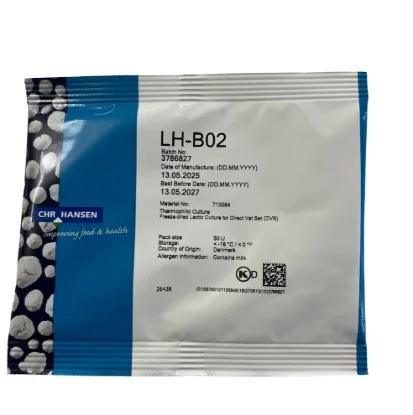
LH-B02 Freeze-dried 50u
Defined thermophilic lactic acid culture.
The culture enhances the overall flavor intensity of the cheese by accentuating important flavor notes.
The culture is primary applied in the production of Italian and Swiss cheese varieties.
The culture can be applied alone or in combination with other lactic cultures, e.g. Streptococcus thermophilus and Lactobacillus delbrueckii subsp.bulgaricus and LD culture.

MO-10 Freeze-dried 50u
Mesophilic homofermentative culture, type O.
This culture contains specially selected strains chosen for their phage resistance and ability to produce lactic acid quickly.
This culture does not produce CO2.
The culture is primarily used in the manufacture of Continental cheese types with no eyes and short texture (e.g.Pecorino) and soft cheese specialties.
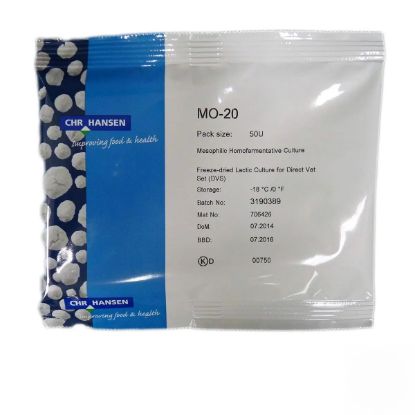
MO-20 Freeze-dried 50u
Mesophilic homofermentative culture, type O.
This culture contains specially selected strains chosen for their phage resistance and ability to produce lactic acid quickly.
This culture does not produce CO2.
The culture is primarily used in the manufacture of Continental cheese types with no eyes and short texture (e.g.Pecorino) and soft cheese specialties.
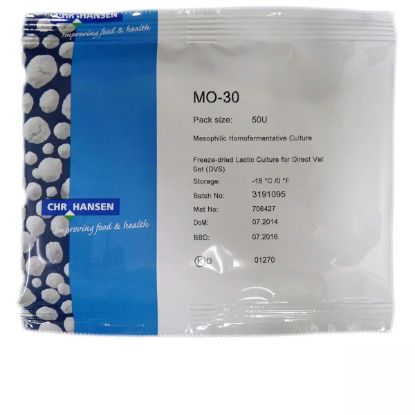
MO-30 Freeze-dried 50u
Mesophilic homofermentative culture, type O.
This culture contains specially selected strains chosen for their phage resistance and ability to produce lactic acid quickly.
This culture does not produce CO2.
The culture is primarily used in the manufacture of Continental cheese types with no eyes and short texture (e.g.Pecorino) and soft cheese specialties.
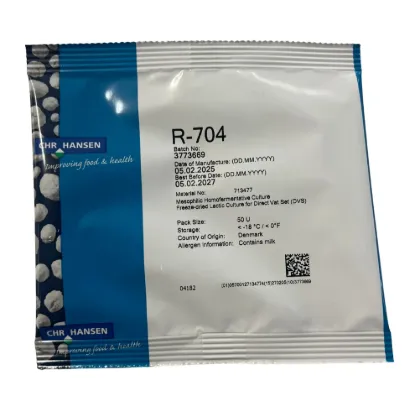
R-704 Freeze-dried 50u
Mesophilic homofermentative culture, type O.
This Chr.Hansen culture range provides phage resistant defined strains for continuous Direct Vat Set (DVS) use.
This culture contains specially selected strains chosen for their phage resistance and ability to produce lactic acid quickly.
This culture does not produce CO2 .
The culture is primarily applied in the production of cheeses with a closed texture, e.g. Cheddar, Feta and Cottage cheese.
The culture can be applied in other fermented dairy products, in combination or not with other lactic cultures.
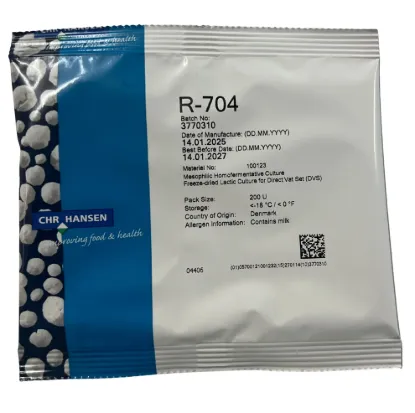
R-704 Freeze-dried 200u
Mesophilic homofermentative culture, type O.
This Chr.Hansen culture range provides phage resistant defined strains for continuous Direct Vat Set (DVS) use.
This culture contains specially selected strains chosen for their phage resistance and ability to produce lactic acid quickly.
This culture does not produce CO2 .
The culture is primarily applied in the production of cheeses with a closed texture, e.g. Cheddar, Feta and Cottage cheese.
The culture can be applied in other fermented dairy products, in combination or not with other lactic cultures.