Propionic & Flavor Developing Cultures
Propionic and other cultures use distinct fermentation pathways to develop flavors in the cheese body.
CAF Frozen 500u
Mesophilic aromatic culture, type L.
The culture produces flavor and CO2.
CAF is designed to be used as a flavor adjunct culture with Chr.Hansen’s cultures to produce a highly flavored end product.
EMFOUR Frozen 500u
Thermophilic homofermentative culture blend.
In 1984 it was selected by Dutch cheesemakers as the most effective thermophilic culture for accelerating ripening in Dutch cheeses.
The culture significantly enhances mature and nutty flavor notes, and there is a tendency towards sweet, sour and salt tastes, too.
The body of the cheese is also enhanced by the use of EMFOUR.
The culture can reduce the ripening time by several weeks depending on the type of cheese, storage temperature and desired flavor.

LH-17 Frozen 500u KFP (Box of 10 pouches)
Defined thermophilic lactic acid culture.
The culture enhances the overall flavor intensity of the cheese by accentuating important flavor notes, and especially nutty flavor.
This Chr.Hansen culture range provides a complete line of Kosher for Passover blends.
The culture is primary applied in the production of Italian and Swiss cheese varieties.
The culture can be applied alone or in combination with other lactic cultures, e.g. Streptococcus thermophilus and Lactobacillus delbrueckii subsp.bulgaricus and LD culture.
PS-4 Frozen 500u
Selected propionic acid bacteria culture.
The culture is primarily used for the production of Swiss-type cheeses, such as Emmental, Gruyère, Greve and similar types where the typical propionic acid aroma and eye formation are desired.
The culture is normally applied in combination with lactic cultures, such as Streptococcus thermophilus, Lactobacillus helveticus, Lactobacillus delbrueckii subsp.bulgaricus and LD cultures.
The culture ferments lactate resulting in the formation of propionic and acetic acids and large amounts of carbon dioxide.
Propionic acid cultures grow slowly in milk and have a low proteolytic activity.
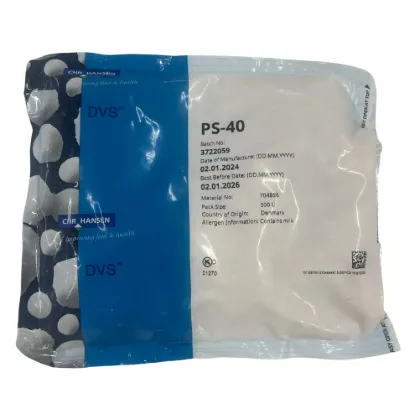
PS-40 Frozen 500u
Selected propionic acid bacteria culture, highly concentrated.
The culture is primarily used for the production of Swiss-type cheeses, such as Emmental, Gruyère, Greve and similar types where the typical propionic acid aroma and eye formation are desired.
The culture is normally applied in combination with lactic cultures, such as Streptococcus thermophilus , Lactobacillus helveticus, Lactobacillus delbrueckii subsp.bulgaricus and LD cultures.
The culture ferments lactate resulting in the formation of propionic and acetic acids and large amounts of carbon dioxide.
Propionic acid cultures grow slowly in milk and have a low proteolytic activity.
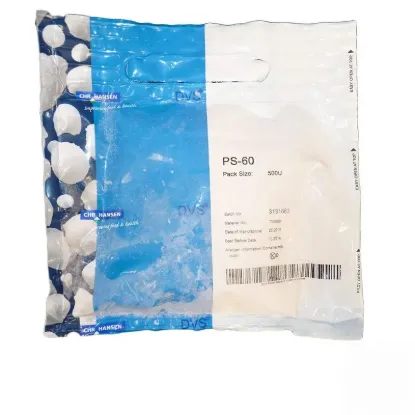
PS-60 Frozen 500u
Selected propionic acid bacteria culture, highly concentrated.
The culture is primarily used for the production of Swiss-type cheeses, such as Emmental, Gruyère, Greve and similar types where the typical propionic acid aroma and eye formation are desired.
The culture is normally applied in combination with lactic cultures, such as Streptococcus thermophilus , Lactobacillus helveticus, Lactobacillus delbrueckii subsp.bulgaricus and LD cultures.
The culture ferments lactate resulting in the formation of propionic and acetic acids and large amounts of carbon dioxide.
Propionic acid cultures grow slowly in milk and have a low proteolytic activity.

PS-1 Freeze-dried 5u
Selected propionic acid bacteria culture.
The culture is primarily used for the production of Swiss-type cheeses, such as Emmental, Gruyère, Greve and similar types where the typical propionic acid aroma and eye formation are desired.
The culture is normally applied in combination with lactic cultures, such as Streptococcus thermophilus , Lactobacillus helveticus, Lactobacillus delbrueckii subsp.bulgaricus and LD cultures.
The culture ferments lactate resulting in the formation of propionic and acetic acids and large amounts of carbon dioxide.
Propionic acid cultures grow slowly in milk and have a low proteolytic activity.
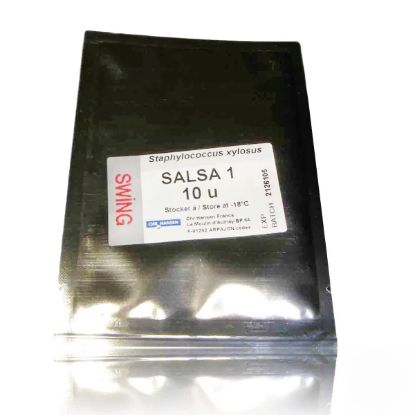
SALSA 1 Swing Freeze-dried 10u
A selected single strain ripening culture with origins in traditional cheese making.
SALSA is used to flavor cheeses where sulphur/traditional raw milk cheese aroma is desired.
The culture may also be used to affect texture or for coloring the surface of smeared cheeses.
La culture peut être utilisée dans la fabrication de tous types de fromages à croûtes lavées (morgées) ou mixtes.
elle contribue à assouplir la pâte et à réduire le temps d'affinage.
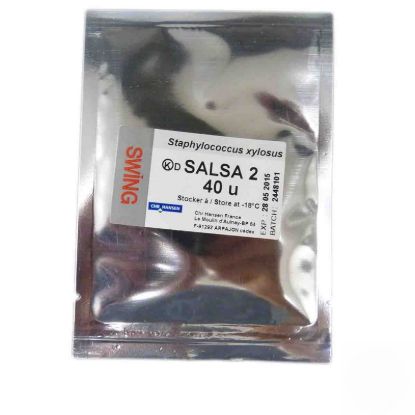
SALSA 2 Swing Freeze-dried 40 u
A selected single strain ripening culture with origins in traditional cheese making.
SALSA is used to flavor cheeses where sulphur/traditional raw milk cheese aroma is desired.
The culture may also be used to affect texture or for coloring thesurface of smeared cheeses.
The culture may be applied in the production of all smeared and mixed rind cheeses.
The cultures contributes to soften cheese body and may reduce ripening time.
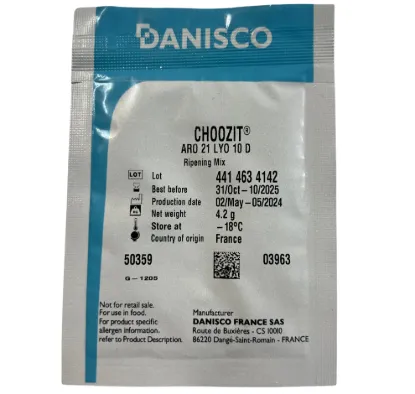
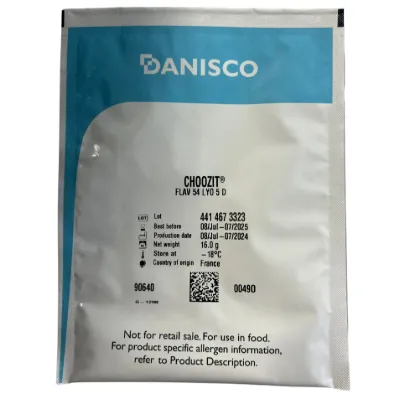
FLAV 54 Freeze-dried 5 D
FLAV 54 LYO 5 D is a special adjunct for the Cheddar cheese production and its flavour enhancement, but also for other semi-hard cheese. A special adjunct which accelerates acidification and proteolysis, and which enhances strong and sweet flavour compounds.
FLAV 54 LYO 5 D strongly enhances the flavour release in Cheddar by way off a highly intense and sweet note, and accelerates proteolysis, reducing your ripening costs.
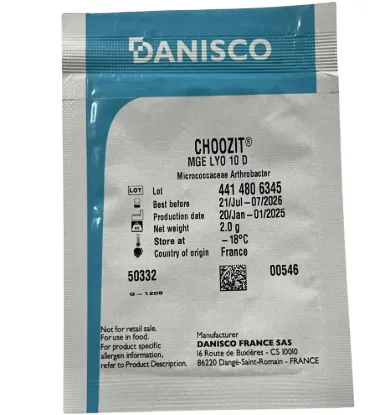
MGE Freeze-dried 10 D
- Formation of a natural, white-creamy coloured surface flora.
- Development of characteristic aromas and flavours.
- When MGE LYO 10 D is inoculated into milk before renneting, it allows to achieve some degree of pre-ripenning.
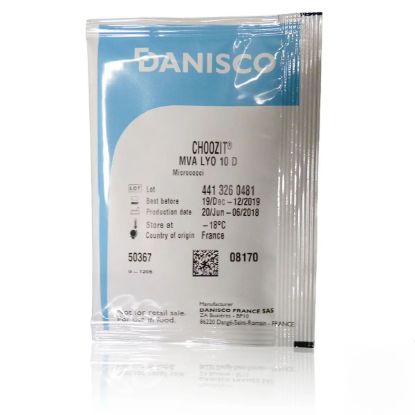
MVA Freeze-dried 10 D
- The catalase positive micrococcacae are optional anaerobes and are unable to acidify or ferment the sugar in milk. This strain exhibits a good resistance to salt and its enzymatic activity contributes to develop flavour and texture.
- Stimulation of lactic cultures.
- Enhancement of cheese texture and aroma.
- Rapid, selective implantation can inhibit potentially contaminating micro-organisms.