
Chr Hansen
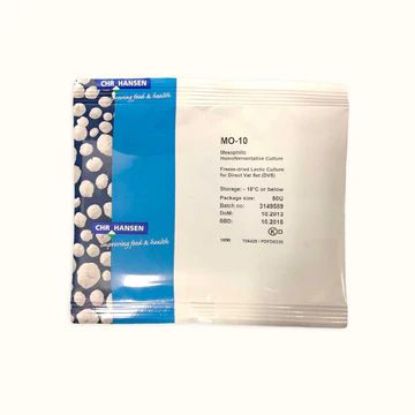
MO-10 Freeze-dried 50 u
Mesophilic homofermentative culture, type O.
This culture contains specially selected strains chosen for their phage resistance and ability to produce lactic acid quickly.
This culture does not produce CO2.
The culture is primarily used in the manufacture of Continental cheese types with no eyes and short texture (e.g.Pecorino) and soft cheese specialties.
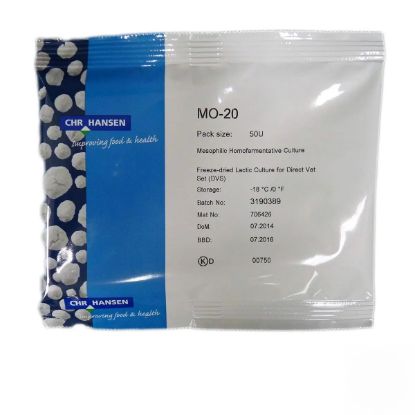
MO-20 Freeze-dried 50 u
Mesophilic homofermentative culture, type O.
This culture contains specially selected strains chosen for their phage resistance and ability to produce lactic acid quickly.
This culture does not produce CO2.
The culture is primarily used in the manufacture of Continental cheese types with no eyes and short texture (e.g.Pecorino) and soft cheese specialties.
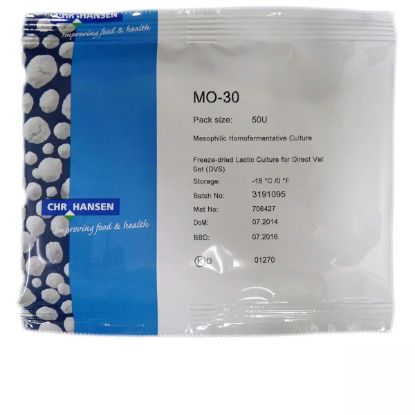
MO-30 Freeze-dried 50 u
Mesophilic homofermentative culture, type O.
This culture contains specially selected strains chosen for their phage resistance and ability to produce lactic acid quickly.
This culture does not produce CO2.
The culture is primarily used in the manufacture of Continental cheese types with no eyes and short texture (e.g.Pecorino) and soft cheese specialties.
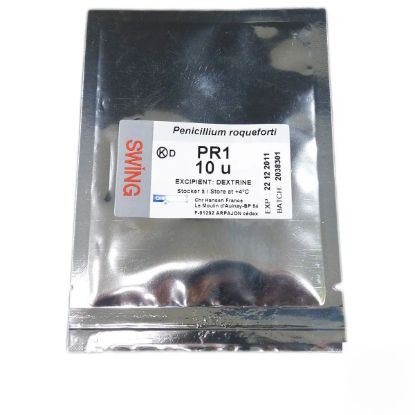
PR1 Swing Freeze-dried 10 u
A selected single stain ripening culture with origin in traditional cheese making.
SWING® P.R.cultures are an essential ingredient in the ripening process of blue mold cheeses.
The cultures will upon germination develop a blue mycelium in the cheese and contribute to the typical flavor (by lipolysis) and texture (proteolysis) of the cheese.
The culture may be used in production of Danablu, Roquefort type, Stilton and other blue cheese types.
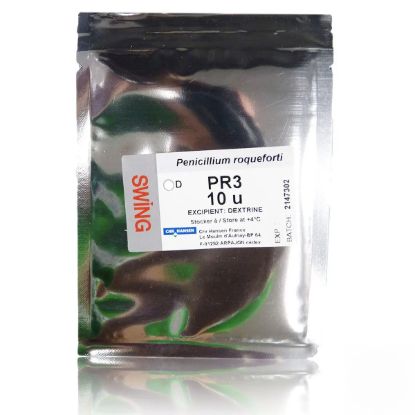
PR3 Swing Freeze-dried 10 u
A selected single stain ripening culture with origin in traditional cheese making.
SWING® P.R.cultures are an essential ingredient in the ripening process of blue mold cheeses.
The cultures will upon germination develop a blue mycelium in the cheese and contribute to the typical flavor (by lipolysis) and texture (proteolysis) of the cheese.
The culture may be used in production of Danablu, Roquefort type, Stilton and other blue cheese types.
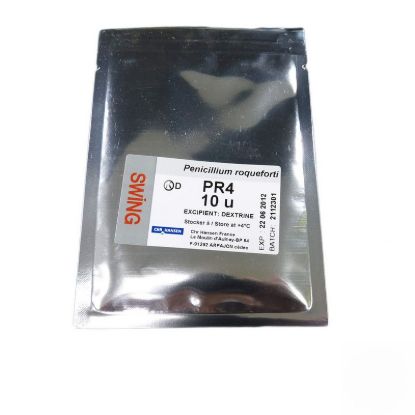
PR4 Swing Freeze-dried 10 u
A selected single stain ripening culture with origin in traditional cheese making.
SWING® P.R.cultures are an essential ingredient in the ripening process of blue mold cheeses.
The cultures will upon germination develop a blue mycelium in the cheese and contribute to the typical flavor (by lipolysis) and texture (proteolysis) of the cheese.
The culture may be used in production of Danablu, Roquefort type, Stilton and other blue cheese types.